

Article: How to Build a Better Bed One Layer at a Time

How to Build a Better Bed One Layer at a Time
A comfortable bed is less about piling on more and more about choosing each layer for a reason. Start with the support underneath, then build upward with materials and pieces that suit the way you sleep.
The most inviting beds often look simple, but every layer has a job. The frame and mattress provide support, the sheets sit against your skin, and the duvet manages warmth. Decorative layers can come last, if they are invited at all.
If your bed has gradually become a collection of unrelated sheets, pillows, throws, and good intentions, rebuilding it does not mean replacing everything. Work from the bottom up, keep what serves you well, and pay attention to the places where comfort breaks down.
Start With the Frame
A bed frame does more than lift the mattress off the floor. It needs to provide the kind of support your mattress manufacturer requires, including the correct foundation, center support, and slat spacing. Those requirements vary, so check the mattress warranty instead of relying on one universal measurement. The wrong support can allow a mattress to sag before its time.
Storage is the next practical question. Drawers are easy to reach but need clearance, while a lift-up frame provides more uninterrupted space for bulky items. Choose the style that fits the room and what you realistically plan to store.
A headboard is equally personal. If you read or drink coffee in bed, choose something comfortable to lean against. If the bed is mainly for sleeping, a simple frame without one can make the room feel lighter.
Decide Whether the Mattress Needs Replacing
The right mattress should keep you supported without creating obvious pressure points. Side sleepers often prefer more cushioning around the shoulders and hips, while back and stomach sleepers may feel better on a firmer surface. Body weight and personal preference matter too, so firmness labels are only a starting point.
Foam can provide close contouring and motion isolation, while innerspring and hybrid constructions often feel more buoyant. Breathability varies by design. When possible, choose a useful trial period; a quick lie-down in a showroom rarely tells you how a mattress will feel at 3 a.m. three weeks later.
A topper can soften a mattress that still provides even support. It cannot repair deep impressions or a mattress that no longer supports you properly; in those cases, another layer mostly gives the sag somewhere nicer to hide.
Begin the Bedding With the Fitted Sheet
The fitted sheet is the first bedding layer to consider because it stays in contact with you throughout the night. Look for a fabric that feels comfortable, allows heat and moisture to move away from the body, and fits the mattress without pulling loose. Pocket depth matters, but deeper is not automatically better; too much excess fabric can bunch under you.
Linen works especially well here because the flax fibers are naturally breathable, absorbent, and thermoregulating. Our European linen sheet sets are made from 165 GSM European flax linen, a weight chosen to balance softness, airflow, and durability. The fabric is garment-washed, so it arrives relaxed and continues to soften with use.

Decide Whether You Want a Top Sheet
A top sheet is optional when you sleep under a duvet with a removable cover. In Denmark and much of Scandinavia, the usual arrangement is a fitted sheet and covered duvet, with no flat sheet in between. The duvet cover serves as the washable outer layer and keeps the bed pleasantly simple.
There are still good reasons to use one. A top sheet provides another washable barrier and a lighter covering on warm nights. If that suits the way you sleep, choose a breathable linen top sheet rather than treating it as a layer that must be tucked in with military precision. The corner at the foot of the bed will survive a little freedom.
Choose the Duvet Insert by Warmth
The duvet insert provides insulation, while the duvet cover provides the surface you see and feel. Down, wool, and synthetic fills can all work well; the right option depends on bedroom temperature, how warm you sleep, allergies, laundering preferences, and whether you like a light or weightier feel.
For down inserts, fill power measures loft rather than the amount of down inside. A higher fill power means the down can trap more air for its weight, but it does not tell you the insert’s total warmth on its own. Fill weight and construction matter too, so a single fill-power number should not make the decision for you.
A duvet cover protects the insert and is easier to wash than the filled piece. It also lets you change the bed’s color or pattern while keeping the same insert. Our European linen duvet covers include four corner ties, a 12-inch internal flap, and buttons at the foot to help the layers stay aligned. If you are deciding between a duvet and a comforter, our duvet and comforter comparison explains the practical differences without declaring one universally superior.

Consider Two Duvets for a Shared Bed
The Scandinavian sleep method places two individual duvets on one shared bed, allowing each person to choose the warmth and fill that feels right without negotiating custody of the covers.
It may look unfamiliar at first, although the absence of a 2 a.m. tug-of-war tends to win people over quickly. Our guide to why Scandinavians use separate duvets covers the setup in more detail.
Choose Pillows by Loft and Support
A pillow should keep your neck comfortably aligned with the rest of your spine. Side sleepers generally need more loft to fill the space between the shoulder and head, back sleepers often prefer a medium loft, and stomach sleepers usually need a lower profile. Shoulder width, mattress firmness, and how much the filling compresses all affect the result.
Fill power can describe the loft of down, but it does not determine the right pillow firmness. Pay attention to how the pillow holds its shape through the night and whether your neck feels relaxed in the morning. The pillowcase matters as well: a breathable fabric keeps the surface comfortable, while a secure envelope closure prevents the pillow from working its way out. Our European linen pillowcases use an 8-inch internal flap and a clean one-inch flange, with no ruffles to negotiate at bedtime.

Let the Bedding Finish the Room
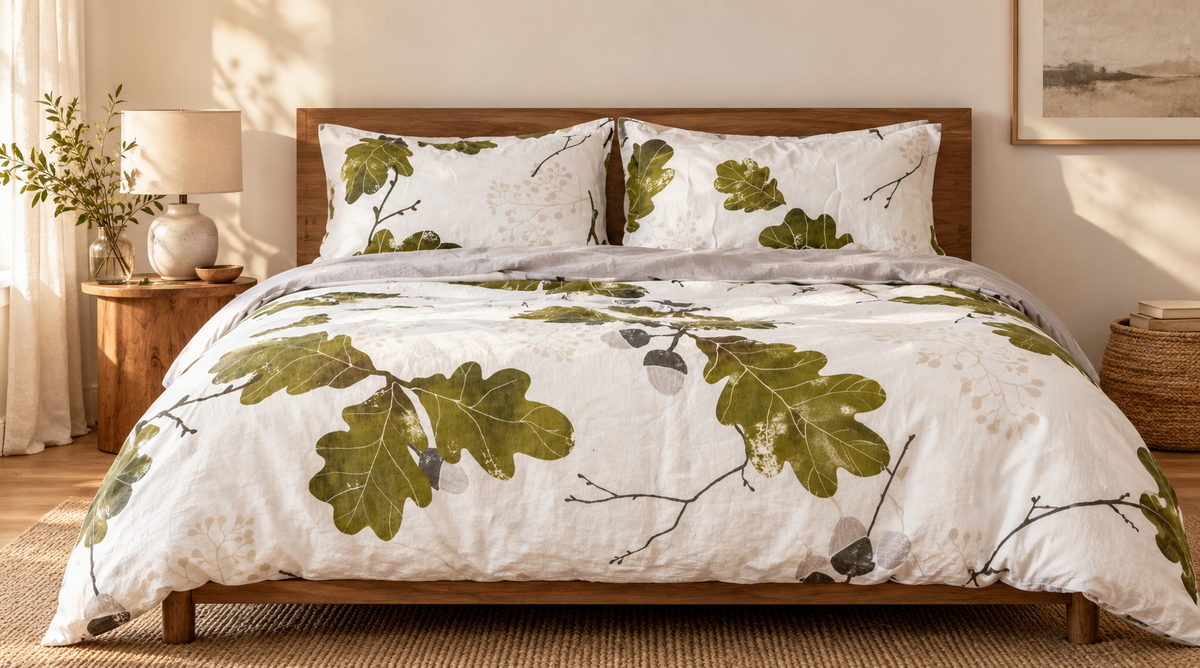
Once the functional layers are in place, decide how much decoration the bed actually needs. A printed duvet cover can become the focal point in a quiet room, while a solid color gives artwork, wood grain, or a view outside more space to lead. Linen’s natural texture adds depth without requiring a pile of additional accessories.
Throws and decorative cushions can still earn a place when they add warmth or make the bed more comfortable for reading. Choose natural materials when possible, and stop before making bedtime feel like closing a small home-goods store. If six cushions spend every night migrating to a chair, one or two may be plenty.
Keep the Layers That Work
A well-built bed supports your body, manages temperature, and feels calm at the end of the day. Work from the frame upward and replace only the layer causing a problem. The biggest improvement may come from a fitted sheet that stays put or a duvet weight that finally suits the room.
Each layer should make the bed more comfortable, easier to care for, or better suited to your space. Once those jobs are covered, you can stop. The bed is allowed to look finished without wearing everything it owns.
Read more
How to Choose Scandinavian Bedding for Your Bedroom
Choose Scandinavian bedding that works with your room. Learn how to use linen, natural colors and Nordic prints without making the space feel busy.
Read more

Leave a comment
This site is protected by hCaptcha and the hCaptcha Privacy Policy and Terms of Service apply.